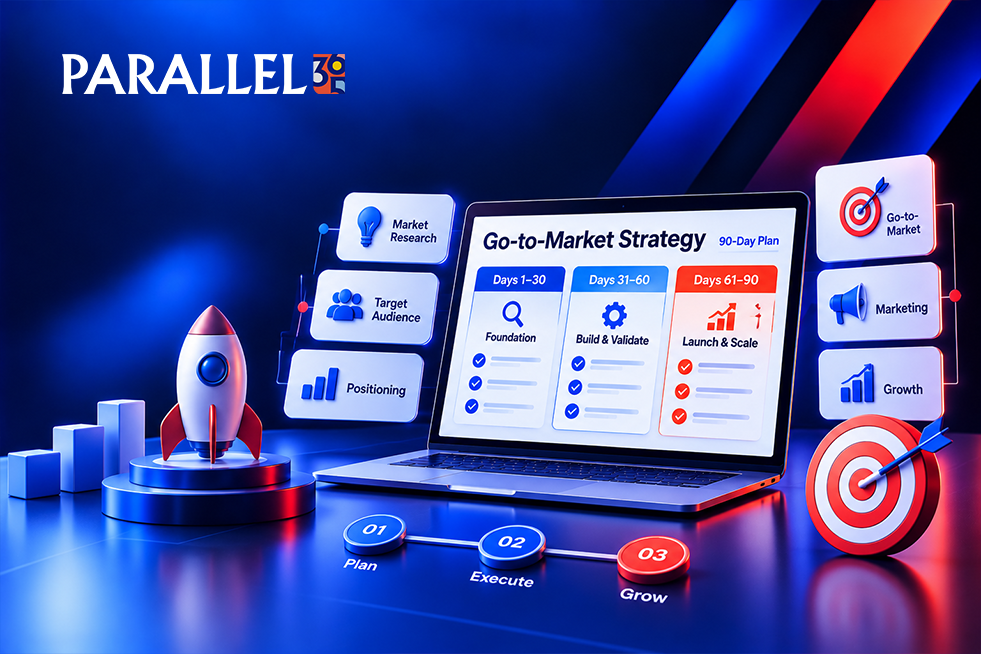
You’ve built the product. Maybe it’s even good. But launch day comes, you post about it, send a few messages, and then wait for customers who don’t show up.
It’s one of the most common startup stories, and it’s rarely about the product. It’s about the plan to reach people. This guide explains what a go-to-market strategy is, then gives you a 90-day go-to-market plan and checklist you can start using this week. It’s written for founders and small teams who want clear steps, not jargon.
What Is a Go-to-Market Strategy?
If you’re asking what is a go-to-market strategy, here’s the plain-English answer: it’s your plan for getting your product or service in front of the right people and winning your first customers.
It answers five questions. Who are you selling to? What problem do you solve? What are you offering, and at what price? Where will you reach people? How will you know it’s working?
A go-to-market plan is different from a general marketing plan. It’s focused on a launch, with a clear start, a short timeline, and a goal of early traction. Your longer-term marketing plan grows out of it.
For founders building their first growth strategy, our startup and early-stage business growth solution explains how positioning, demand validation, and early traction work together.
The One-Page Go-to-Market Strategy Template
Before the checklist, capture your plan on one page. Copy this go to market strategy template into a document, and fill it in. Simple answers are better than perfect ones.
| Plan Section | Your Answer |
|---|---|
| Ideal customer (who, and what they struggle with) | __________________ |
| Your value (the problem you solve, in one sentence) | __________________ |
| Offer and pricing | __________________ |
| Main channels (2 to 3) | __________________ |
| 90-day goal (a number and a date) | __________________ |
| Numbers to track weekly | __________________ |
Days 1 to 30: Build the Foundation
This first phase of your startup GTM plan is about clarity. Skipping it is the most expensive mistake you can make.
- Talk to real customers. Have a handful of conversations with people who match your ideal customer. Ask about their problems, not your product.
- Define your ideal customer. Write down who they are, what they need, and where they spend time. You can also explore Parallel 365’s business growth solutions to understand how marketing approaches differ across business types.
- Write your message. Explain what you do, who it’s for, and why it’s different, in one plain sentence.
- Set your offer. Decide what you’re selling, the price, and the first action you want people to take.
- Build a simple home base. A clear website or landing page with one call to action, such as joining a waitlist or booking a call.
- Set up tracking and your email list. Choose an email tool, add a signup form, and make sure you can see where visitors come from.
Days 31 to 60: Build Momentum Before Launch
Now you start finding people and warming them up. A strong product launch marketing plan builds an audience before launch day, not on it.
- Start a waitlist or early-access list. Invite people to sign up, and email them regularly with progress and useful tips.
- Reach out directly. Message potential customers personally, whether by email or LinkedIn, and ask for feedback.
- Run a small beta or pilot. Give a few early users access in exchange for honest input and, if they’re happy, a testimonial.
- Publish helpful content. Share simple posts or guides that answer your customers’ questions.
- Test your message. Notice which phrases get replies and clicks, and tighten your wording. For additional insights into startup marketing, see our guide to marketing agencies for SaaS and tech startups.
- Plan your launch emails. Draft the sequence now, so launch week isn’t a scramble.
Days 61 to 90: Launch and Learn
Launch is the start of the learning, not the finish. This phase of your 90-day go-to-market plan is about turning attention into customers and finding what’s worth repeating.
- Announce to your list first. Your email audience already cares, so give them early access or a launch offer.
- Follow up fast. Reply to every inquiry quickly, and book calls or demos while interest is high.
- Test one paid channel. A small search ad test shows which messages bring real leads, if budget allows. Not sure whether to start with organic search or paid advertising? Read our SEO vs. Google Ads comparison to understand the differences.
- Welcome and onboard new customers. Send helpful emails that guide them to their first win with your product.
- Ask for reviews and referrals. Early customers are your best source of proof.
- Review and decide. Look at your numbers, keep what works, drop what doesn’t, and plan the next 90 days.
How Email Fits Your Launch
Email is one of the few channels you own. Social platforms and ad algorithms change, but your list stays with you. Here are the core emails in a startup launch:
| When | Purpose | |
|---|---|---|
| Welcome | Right after signup | Say hello, set expectations, share one useful thing |
| Progress updates | Every week or two before launch | Build interest and trust |
| Launch announcement | Launch day | Invite people to act, with a clear offer |
| Onboarding series | After purchase or signup | Help new users get their first result |
| Follow-up nurture | Weeks after launch | Stay useful to people who haven’t bought yet |
Always get permission before emailing people, make it easy to unsubscribe, and follow the email rules that apply to you.
Quick Diagnosis: Where Should You Start?
| What You’re Seeing | Start With |
|---|---|
| You’re not sure who your customer is | Days 1 to 30: customer conversations and message |
| You have a product but no audience | Days 31 to 60: waitlist, outreach, and content |
| You launched, but sales are slow | Days 61 to 90: follow-up, email, and a small ad test |
| You get interest but few buyers | Offer, pricing, and message in Days 1 to 30 |
Mistakes That Make It Worse
While working through your GTM strategy checklist, avoid a few common traps:
Launching without talking to customers. Guessing at problems is costly. Real conversations save months.
Waiting until the product is perfect. Start building an audience early, not after launch.
Trying every channel. Pick two or three and do them well.
Skipping numbers. Without a goal and tracking, you can’t tell what’s working.
Ignoring feedback after launch. Early customers tell you exactly what to improve. Listen.
For more guidance on choosing the right marketing approach, read our full-service vs. specialized marketing agency guide.
Which Numbers Should You Track?
Keep your list short. For most startups, these are enough:
- Waitlist or email signups
- Calls, demos, or trials booked
- First purchases or paying customers
- Where each lead came from
- Replies and clicks on your emails, since open rates are less reliable than they used to be
How Long Does It Take to See Results?
You can see early signals, like signups and conversations, within the first few weeks. Ninety days is enough to build a foundation and find what works, but steady growth usually takes longer. Treat the end of day 90 as a checkpoint, not a finish line.
When to Work With a Marketing Partner
Many founders run the early stages themselves. It makes sense to bring in help when:
- You’re clear on the product but unsure how to reach buyers
- You don’t have time to run email, content, and outreach consistently
- You want your website, search, ads, and email working together
- You’re past the first customers and ready to grow
Whoever you hire, make sure you own your accounts and email list, ask for reports that show leads and customers rather than just clicks, and avoid anyone who guarantees results.
When you’re ready for professional support, explore Growth Strategy & Market Expansion for strategic planning and market positioning, or Performance Growth & Lead Generation for SEO, paid campaigns, conversion optimization, and measurable lead generation.
Frequently Asked Questions
What is a go-to-market strategy?
It’s a plan for reaching your ideal customers and winning your first sales, covering who you’re targeting, what you offer, which channels you’ll use, and how you’ll measure success.
How is a GTM strategy different from a marketing plan?
A GTM strategy focuses on a launch with a short timeline. A marketing plan covers ongoing efforts, and grows out of what you learn from your launch.
How long should a go-to-market plan be?
One or two pages is plenty. A short plan you use beats a long one you don’t.
What should a 90-day go-to-market plan include?
A foundation phase, a pre-launch audience-building phase, and a launch-and-learn phase, with a clear goal and numbers to track.
Do startups need email marketing?
It’s strongly recommended. Email gives you an audience you own and a direct way to share updates, launches, and offers.
When should I start marketing before launch?
As early as possible, ideally weeks or months before. Building a waitlist and early conversations make launch day far stronger.
Planning a launch and not sure where to focus? Parallel 365‘s Performance Growth & Lead Generation team builds launch marketing as a connected growth system, so more of the people who find you turn into calls and customers. Schedule a strategy review and we’ll help you shape a plan that fits your startup.